
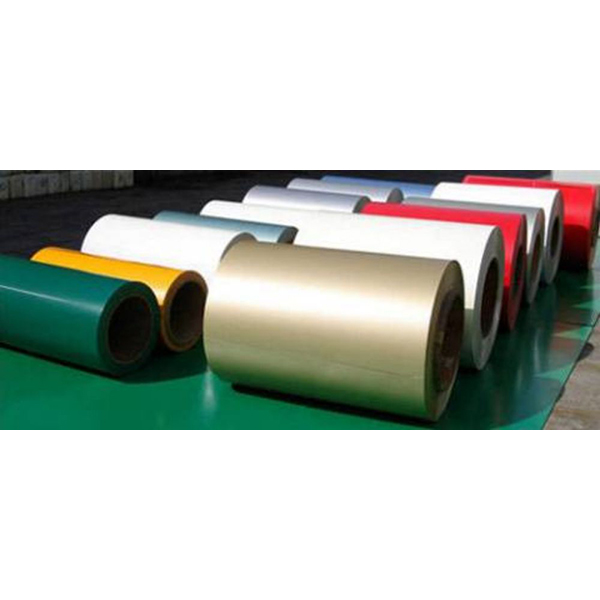
Start from the operation, not a favourite temper
The useful first question is not whether O, H14 or H24 is ‘best’. It is what the coated strip must become and where the highest strain occurs. A flat laminate skin, a shallow roll-formed profile, a brake-bent tray and a deep-drawn shell place different demands on strength, elongation, springback, surface protection and coating flexibility.
BS EN 515:2017 establishes the designation system for wrought-aluminium tempers. The designation communicates the sequence of basic treatments; it does not replace a product standard, mechanical-property limits or an application trial. For general coil-coated aluminium, BS EN 1396:2023 is the relevant product specification framework and includes substrate, mechanical-property, dimensional, coating and inspection requirements.
| Fabrication route | Evidence to agree before production |
|---|---|
| Slitting, laminating or substantially flat use | Required strength and flatness, gauge and width tolerances, edge condition, lamination temperature/pressure and surface-protection plan |
| Continuous roll forming or shallow profiling | Profile drawing, minimum radii, pass sequence, rolling direction, springback window, surface contact points and a same-tool trial |
| Brake bending, folding or hemming | Inside radius-to-thickness relationship, bend angle and direction, edge preparation, tool condition, temperature and crack/delamination criterion |
| Stamping or shallow drawing | Strain path, blank geometry, draw depth, restraint, lubrication compatibility, appearance zone and representative coated blanks |
| Deep drawing or severe multi-stage forming | Material-property and process simulation or trials, draw sequence, anisotropy/elongation evidence where relevant, intermediate steps and responsible engineering approval |
Use alloy and temper as two linked inputs
Alloy family affects the available balance of strength, formability, corrosion behaviour and manufacturing route; temper changes the condition achieved through annealing, strain hardening or other treatment. The Aluminum Association's comparative table illustrates why the pair matters: cold-workability ratings change across tempers of the same alloy, and different alloys with similarly named tempers do not become interchangeable.
Do not convert that qualitative comparison into a universal purchasing table. The final product form, thickness range and applicable standard determine the actual property limits. Ask the supplier to identify the alloy and temper, the governing mechanical-property basis, tensile and elongation limits where relevant, sampling orientation and any order-specific deviation. If structural performance is involved, the responsible designer must approve the material against the applicable design and product standards.
Check the coated system, not bare metal in isolation
ECCA notes that prepainted metal can be sheared, bent, roll formed, deep drawn and spun, but the finish is already present during fabrication. Tool marks therefore become finished-surface defects, and coating flexibility must match the operation. Substrate selection cannot be separated from coating build, cure, pretreatment, protective film, contact pressure and tooling condition.
A bare-substrate certificate can establish material identity and mechanical properties, but it cannot alone prove the appearance or coating response after forming. Pair it with the specified coated-product test and a process-representative first piece. Record rolling direction and sample temperature because direction, geometry and shop conditions can change the result even when the alloy and temper label is unchanged.
A five-step approval route
- Provide the finished-part drawing, use environment, visible surfaces and complete sequence from slitting through assembly.
- Identify the most severe strain location and define strength, stiffness, springback, flatness and appearance requirements without assuming one temper solves all of them.
- Agree alloy, temper, gauge, applicable product standard, mechanical-property limits, test orientation and traceable inspection documents.
- Trial the same coated construction on representative tooling, recording direction, radius, passes, speed, temperature, lubrication or protection and the acceptance result.
- Approve the first piece and retain its settings and samples; re-review when substrate, temper, gauge, coating build, tool or forming route changes.
Qihao perspective: send the drawing before asking for a temper
From a color-coated aluminium manufacturing perspective, ‘please recommend a soft temper’ leaves the critical boundary unstated. A profile section or part drawing, the forming sequence, minimum radii, visible face and finished-part strength requirement let the substrate, paint and fabrication questions be reviewed together.
Qihao recommends treating alloy and temper selection as a technical-review input rather than a catalogue shortcut. For review, provide alloy preferences if any, finished geometry, gauge, forming direction and method, tool or roll details, service environment, coating/colour requirement and the evidence required for release.
This is a marked Qihao perspective based on public standards information and general manufacturing practice. It is not a promise that a particular alloy, temper, radius or process is available or suitable for a specific order; confirmed specifications and representative trials remain controlling.
Sources
- BS EN 515:2017 Aluminium and aluminium alloys — Wrought products — Temper designationsBritish Standards Institution · 2017
- BS EN 1396:2023 Aluminium and aluminium alloys — Coil coated sheet and strip for general applications — SpecificationsBritish Standards Institution · 2023
- Comparative characteristics and applications of aluminium alloys and tempersThe Aluminum Association · Accessed 18 August 2026
- Prepainted metal for designers — forming and production guidanceEuropean Coil Coating Association · Accessed 18 August 2026
Frequently asked questions
Is O temper always the safest choice for a formed part?
No. Greater formability may come with lower strength, more dent sensitivity or a different springback and handling window. Select against the finished geometry and performance, then verify the coated system on representative tooling.
Can two suppliers' H24 material be treated as identical?
Not from the temper code alone. Confirm alloy, product form, gauge, applicable standard and property limits, coating construction, inspection documents and the actual forming result.
Does a mill certificate prove that prepainted aluminium will not crack during forming?
No. It supports material identity and stated properties, but forming also depends on geometry, direction, tooling, temperature, edges, coating and process conditions. Use an agreed coated-product test and representative first piece.
What should a buyer provide for an alloy-and-temper review?
Provide the part/profile drawing, gauge, forming sequence and direction, minimum radii, tool or roll details, visible face, service environment, finished-part strength needs, coating/colour requirements and release evidence.
Related product and technical review
This article provides general information. Product availability and application-specific performance require technical confirmation.