
The short answer: specify the interface, not just the coating
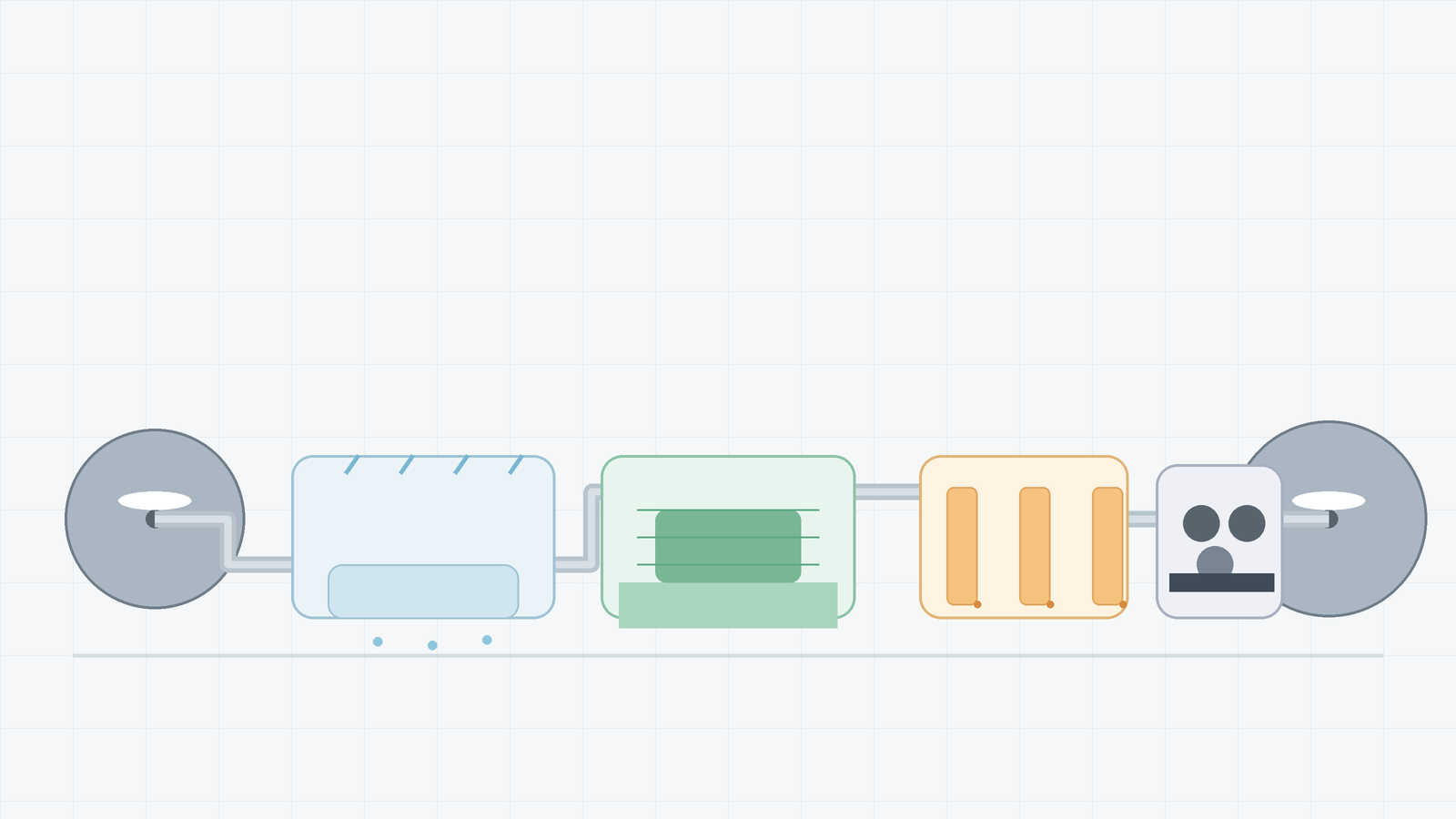
In continuous coil coating, pretreatment is the controlled chemical step between cleaning and priming. It changes the aluminium surface so the primer or topcoat can form a stable bond and so moisture and salts are less likely to attack the metal beneath. The European Coil Coating Association describes no-rinse pretreatment as an established way for many lines to reduce water use while improving consistency; that makes pretreatment a process-control issue, not only an anti-corrosion option.
For buyers, the practical answer is to state the pretreatment requirement in the technical specification. Chromate and chromate-free systems can both serve architectural and industrial applications, but the right choice depends on substrate, line conditions, coating chemistry, forming route and exposure.
What a conversion coating actually does
A conversion coating is a thin layer formed by a chemical reaction with the aluminium surface. It changes the surface chemistry to give the paint a bonding layer and reduces direct contact between the metal and water, salt or contaminants.
The term covers many chemistries. ASTM B449 covers chromates on aluminium; MIL-DTL-5541F defines Type I as compositions containing hexavalent chromium and Type II as compositions containing no hexavalent chromium. These are reference specifications for conversion coatings in general, not product certifications for painted coil, so their scope should be read before the numbers are copied into an RFQ.
How chromate and chromate-free systems compare
| Comparison | What to know |
|---|---|
| Chemistry | Chromate systems use hexavalent-chromium conversion chemistry with a long application history; chromate-free systems use zirconium, titanium, silane or composite chemistry |
| Primary function | Both improve paint adhesion and corrosion resistance, but chromate-free formulations vary more in performance and need case-by-case verification |
| Process form | Chromate systems can be rinse or no-rinse; chromate-free systems are often no-rinse or low-rinse and sensitive to water quality and process window |
| Regulatory pressure | Hexavalent chromium is increasingly restricted in global regulations and project specifications; chromate-free is a common response but is not automatically qualified |
| Verification focus | Type, coating weight, cleaning and water quality, drying conditions, test methods and batch records |
| Scope | Final suitability depends on substrate, process, application, standards and the agreed order |
Six process points that decide whether pretreatment works
- Cleaning: confirm oils, dust and rolling residues are removed and the cleaner is compatible with the conversion chemistry.
- Rinse water: monitor ions, chlorides and hardness; water quality can interfere with conversion reactions.
- Coating weight: follow the chemistry supplier's process window; thicker is not automatically better.
- Drying and reaction: temperature, time and surface state determine whether the conversion layer is complete.
- Line speed and bath control: additions, pH or conductivity, bath life or roll-coater state need defined limits.
- Traceability: record coil number, batch, process parameters and test results for later review.
What to specify and verify before ordering
- State whether hexavalent chromium must be excluded and note whether the requirement comes from project, regulation or company policy.
- Ask the supplier to name the pretreatment category and coating-weight or process controls, not just say chromated or chrome-free.
- Define test standards and limits for adhesion, corrosion, forming and weathering. ASTM D3359 is a tape-adhesion method and ASTM B117 is a salt-spray apparatus practice; neither converts directly into service-life years.
- Require approved samples or first-article reports and retain a physical reference.
- Reconfirm pretreatment whenever alloy, cleaning, coating chemistry or downstream forming changes.
Qihao perspective: ask for the process, not just the label
From a color-coated aluminium manufacturer's perspective, pretreatment is the easiest requirement to compress into one line in an order and the hardest to fix later. Buyers usually focus on film thickness, colour, gloss and price, but when adhesion or edge-corrosion questions arise, the records that matter are often the cleaning and pretreatment parameters.
Qihao recommends asking for a chrome-free declaration together with test standards and batch traceability, then reviewing the chemistry type, process window and acceptance method against the application. This is an observation based on published standards, industry guidance and general manufacturing experience; it is not a claim about any specific product, batch, certification or performance.
Treat pretreatment as part of the material plan: the best coating specification cannot compensate for an unstable interface.
Scope: standards are a starting point, not a certificate
Standards and industry guides help buyers express requirements, but they do not automatically certify a coil. Acceptance depends on the supplier's technical documentation, the agreed order limits, sampling and test results.
Salt-spray and adhesion results are comparative under defined conditions. The same conversion chemistry can behave differently with another alloy, rinse water, drying profile or paint system, so the test method, sample state, failure criteria and retained samples should be written into the acceptance plan.
Sources
- B449 Standard Specification for Chromates on AluminumASTM International · 2022
- MIL-DTL-5541F Chemical Conversion Coatings on Aluminum and Aluminum AlloysU.S. Department of Defense · 2006
- D3359 Standard Test Methods for Rating Adhesion by Tape TestASTM International · 2023
- B117 Standard Practice for Operating Salt Spray (Fog) ApparatusASTM International · 2019
- Coil coatingEuropean Coil Coating Association · Accessed 2026-08-08
- Education: the coil coating processNational Coil Coating Association · Accessed 2026-08-08
Frequently asked questions
Is chromate-free pretreatment always better than chromate?
Not automatically. Chromate-free systems avoid hexavalent chromium, which is often the reason for specifying them, but performance depends on formulation, process control, substrate and test results. Chrome-free is a chemistry label, not a performance grade.
Can I tell from the finished coil whether pretreatment was chromate or chromate-free?
Usually no. The finished surface does not reveal the chemistry. Buyers should ask the supplier to state the pretreatment type in technical and batch documents.
Does passing salt spray mean the coil will last a certain number of years?
No. Salt spray is one comparative method under controlled conditions. Service life depends on substrate, pretreatment, coating, cut edges, environment and maintenance; hours in a salt-spray cabinet cannot be converted directly into years.
What pretreatment information should buyers ask for?
At minimum: whether hexavalent chromium is used, chemistry category, coating weight or process controls, cleaning and water-quality requirements, drying or reaction conditions, test standards and batch traceability.
This article provides general information. Product availability and application-specific performance require technical confirmation.